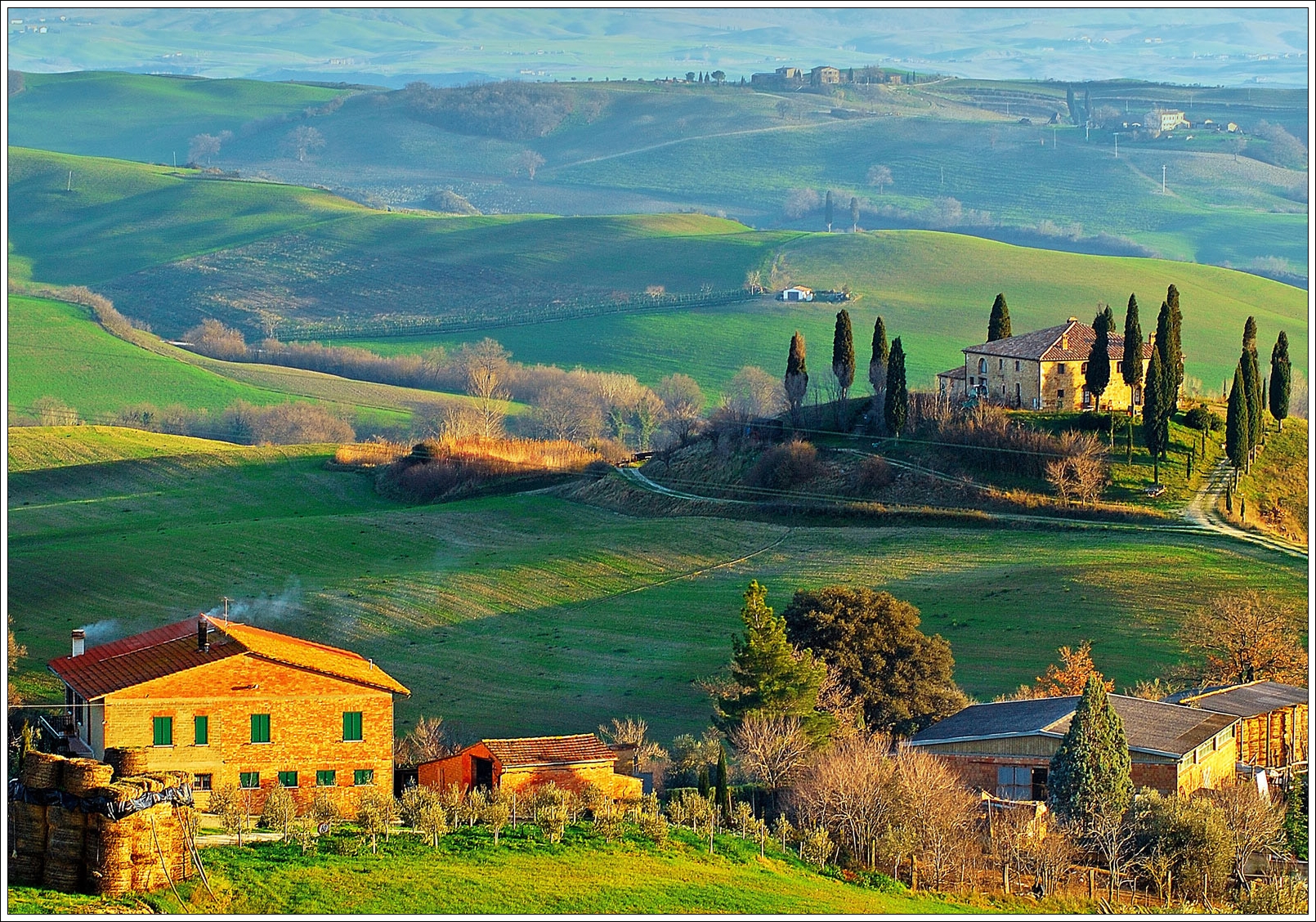
The Tuscan countryside is not a single postcard. It is a working geography of ridges, vines, wheat, and coastal pines—best understood by sleeping inside it.
How the landscape is organised
Hill towns occupy defensive ridges; farms claim the slopes; valleys carry roads and fog. Once you see that pattern, navigation becomes intuitive: climb for views and villages, descend for faster routes.
Chianti’s cultivated intimacy
Chianti feels close-grained—vines, stone houses, and short drives between places with names you already know. It is countryside with a social calendar.
Val d’Orcia’s open composition
UNESCO-listed Val d’Orcia reads like a painted geometry: farmhouses as fixed points, cypress as punctuation, sky as the main character. Distances stretch; silence expands.
Hills above Florence
Olive terraces and belvederes sit in dialogue with the dome on the horizon. Rural, yes—but always aware of the city below.
Maremma’s coastal countryside
Umbrella pines, agricultural plains, and sudden sea views create a different rural mood—less cypress postcard, more Mediterranean breadth.
Etiquette for rural stays
Greet people who work the land. Drive patiently on gravel. Ask before photographing farm labour. Treat the villa as a house with ongoing life, not a stage set. That courtesy is how countryside Tuscany stays hospitable.
Ready to match the itinerary to a house? Explore Tuscany villa rentals or browse Val d’OrciaChiantiMaremma.